
Visual Schedule Templates Printable Pre-Made Presets & Physical Board Formats
Browse 24 research-backed visual schedule templates and printable routines for classrooms, speech therapy, and home. Instant PDF export, zero login, 100% free.
8 Blank Foundational Board Formats
Prefer starting with an empty chassis? Choose any blank board maker below and add your own cards and pictograms from scratch.
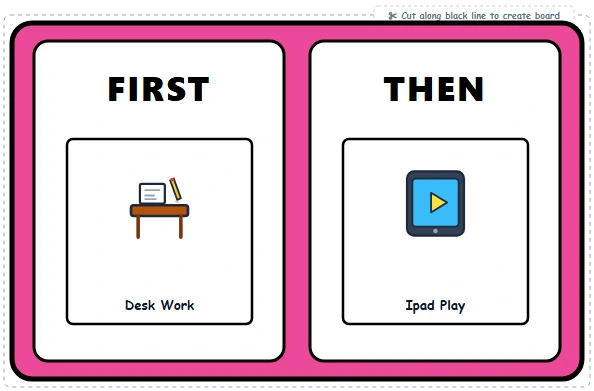
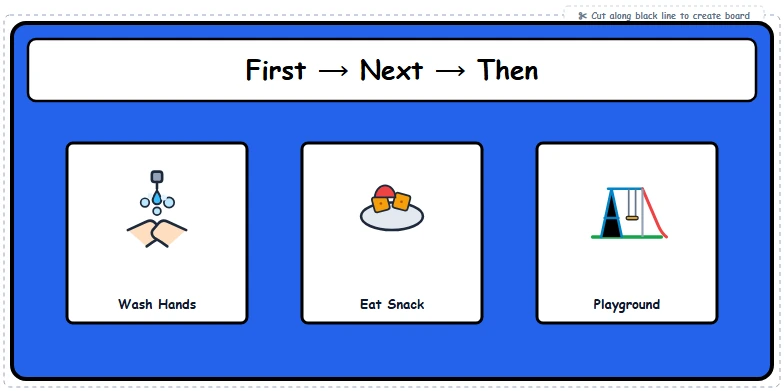
First - Then Transition Board
Pairs a non-preferred task with a motivating reward to de-escalate transition reluctance.
3-Step Sequence Board
Provides an intermediate 3-task bridge between 2-step First-Then and full multi-step strips.
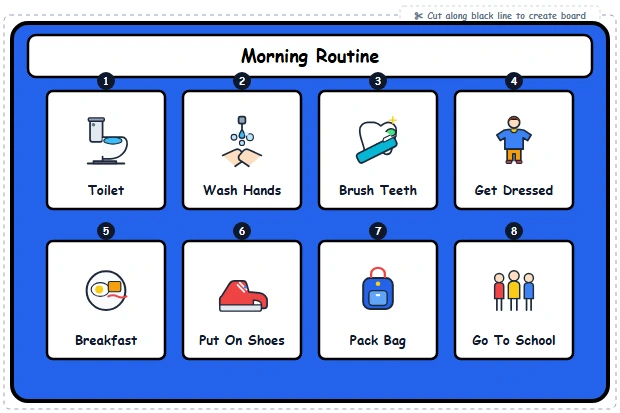
Daily Routine Strip
Horizontal or vertical task sequence with an optional 'All Done' pocket for self-monitoring.
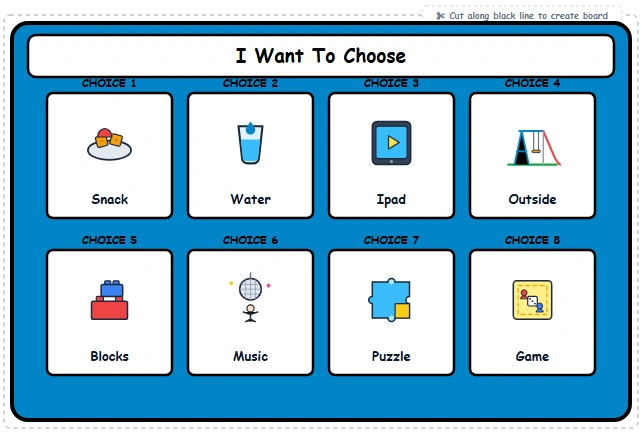
Visual Choice Board
Empowers non-verbal communicators with structured autonomy for snacks, activities, or reinforcers.
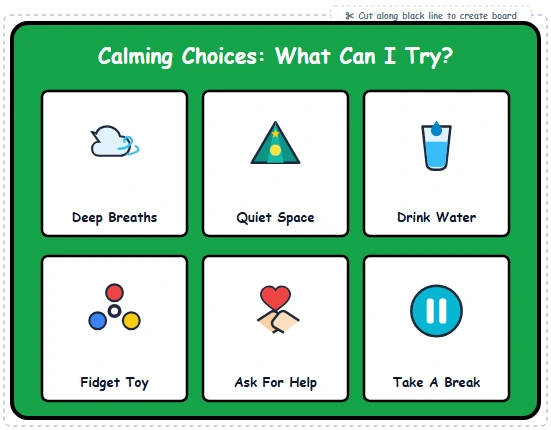
Calm Down & Feelings Board
Provides visual emotional check-ins and evidence-based calming strategies during sensory overwhelm.
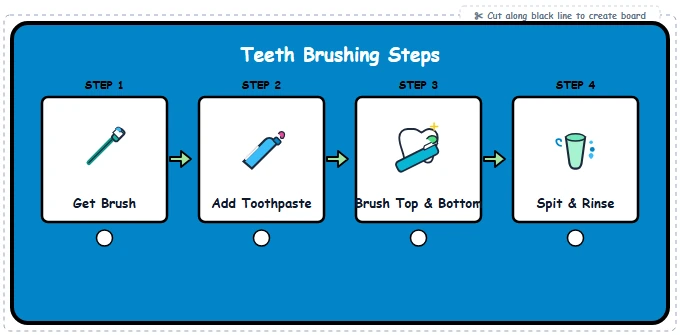
Task Analysis Strip
Deconstructs complex life skills like hand washing, brushing teeth, and getting dressed into micro-steps.
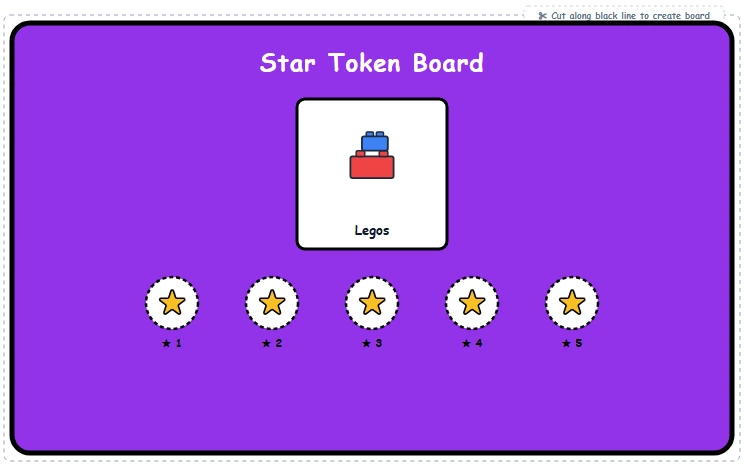
Token Reward Board
Provides tangible positive reinforcement and builds on-task stamina with 3-star or 5-star milestones.
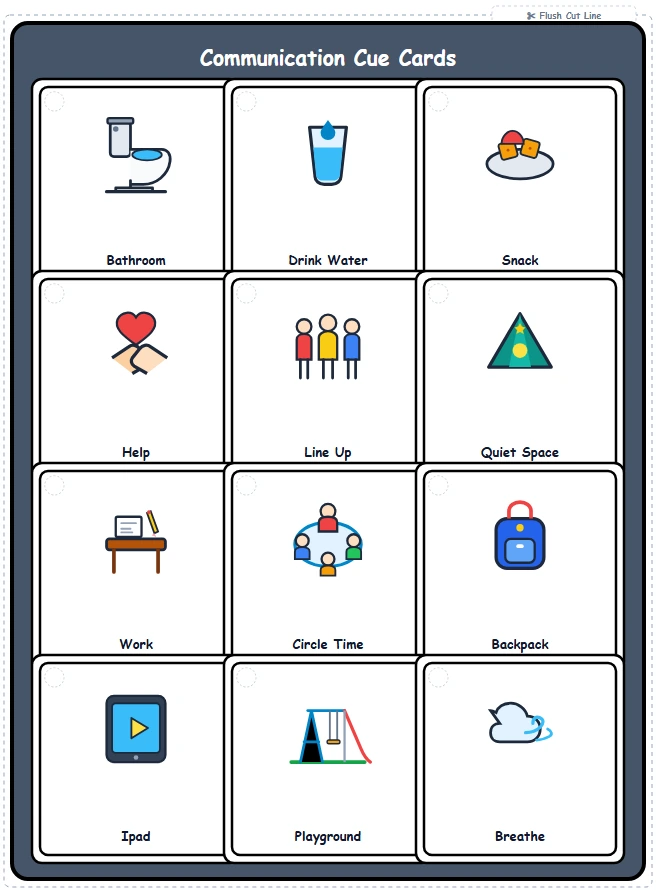
2"×2" Visual Cue Cards
Batch generates standard 2"×2" square cards with 0.5pt cut guides and optional lanyard hole-punch marks.
How to Choose the Right Visual Schedule Template
Selecting the appropriate visual schedule depends on your learner's developmental stage, working memory capacity, and behavioral goals. Use this clinical framework to match the right template format to your child or student:
Overcoming Transition Resistance & Meltdowns
When a child resists stopping preferred play or refuses adult instructions, multi-step directions create acoustic and cognitive overload. Start with a First-Then Board (2 steps). Grounded in Premack's Principle, it pairs an immediate demand with a guaranteed reinforcer. As compliance and stamina grow, scaffold to the 3-Step Sequence (First-Next-Then or Now-Next-Later) to build sequential anticipation.
Building Daily Self-Care & School Independence
For predictable daily routines (morning wake-up, bedtime, classroom subject blocks), use a Daily Routine Strip (5 steps) with an 'All Done' pocket or tactile Velcro pull-off method. For discrete, multi-step physical self-care tasks like potty training, hand washing, or tooth brushing, deploy a Task Analysis Board to isolate micro-motor steps and eliminate auditory nagging.
Task Motivation & Behavioral Stamina
When learners struggle to sustain attention during speech therapy, desk work, or chores, deploy a Token Reward Board (3-star or 5-star economy). The learner identifies what they are "Working For" in advance and earns star tokens for completing micro-tasks. Pediatric behavioral research strongly emphasizes never taking away earned stars (avoid response cost) to maintain trust and motivation.
Self-Advocacy, Regulation & Portable Redirection
Empower non-verbal and emergent communicators with a Visual Choice Board (2 to 8 choices) for autonomous decision-making at snack time or sensory breaks. Use the Calm Down Board during sensory overload to bridge "I Feel" emotional states to "I Need" coping strategies. For hallways, playgrounds, and cafeteria lines, carry 2"×2" Lanyard Cue Cards on a keyring.
Visual Schedule Template Specifications & Suitability
Quickly compare all 8 template formats to determine the ideal card capacity, orientation, and developmental fit for your learner:
| Format | Card Capacity | Orientation | Primary Clinical Purpose | Studio Action |
|---|---|---|---|---|
| First-Then Board | 2 Cards | Landscape | Transitions, Non-Preferred Compliance, Premack Principle | Open Studio |
| 3-Step Sequence | 3 Cards | Landscape | Sequential Working Memory Scaffolding, Bridging | Open Studio |
| Daily Routine Strip | 4–10 Tasks | Landscape / Portrait | Morning, Bedtime & School Schedules, TEACCH Independence | Open Studio |
| Visual Choice Board | 2, 4, 6, 8 Cards | Landscape | AAC Emergent Communication, Autonomous Decision Making | Open Studio |
| Calm Down Board | 4–8 Cards | Landscape | Sensory Meltdown De-escalation, Feelings-to-Coping Mapping | Open Studio |
| Task Analysis Strip | 4–6 Steps | Landscape / Portrait | Forward/Backward Chaining (Hand Washing, Teeth Brushing) | Open Studio |
| Token Reward Board | 1 Target + 3/5 Stars | Landscape | Behavior Reinforcement Economy, Working For Goal Stamina | Open Studio |
| 2"×2" Cue Cards | 12 Cards / Sheet | Portrait / Landscape | Portable Lanyards, Keyrings, Pocket Charts & PECS Systems | Open Studio |
Calibrated for Commercial 2"×2" Hook-and-Loop (Velcro)
Every template on MyRoutineBoard is engineered to strict physical tolerances so printed visual cards align precisely with standard classroom materials without trimming errors:
Precision 0.5pt cut guides eliminate measurement guesswork. All cards fit standard pocket charts, communication books, and Velcro strip channels.
0.2-inch centering guides show the exact placement for standard single-hole punches without cutting into symbol artwork or text labels.
Built-in 0.125-inch gutters provide sufficient thermal laminate seal margin to prevent water peeling or separation during classroom cleaning.
Custom student photos and board drafts are processed and stored exclusively in your browser's local memory. Zero FERPA or HIPAA data leakage.
Visual Schedule Templates: FAQs & Printing Guide
Everything special educators, SLPs, and parents need to know about customizing, laminating, and fabricating printable visual schedules:
What is the most effective visual schedule template for toddlers and emergent learners? ▼
For toddlers (ages 2–4) or children with emergent communication, the 2-step First-Then Board is the gold standard. It deconstructs behavioral demands into two concrete steps based on Premack's Principle: pairing an initial non-preferred task ('First: Put on shoes') with an immediate motivating reinforcer ('Then: Park'). This minimizes cognitive load and prevents transition meltdowns.
How do I choose between a First-Then board and a Daily Routine strip? ▼
Choose a First-Then board if your learner struggles with transition refusal, task avoidance, or has a working memory capacity limited to immediate cause-and-effect. Transition to a Daily Routine Strip (5 steps) once the learner can independently follow single-step directions and needs chronological structure for multi-task sequences like morning routines, hygiene, or classroom transitions.
Are these visual schedule templates free to print and use in schools? ▼
Yes, 100% free. MyRoutineBoard requires no account registration, login, or subscription. Special education teachers, speech-language pathologists (SLPs), occupational therapists, and parents can create, customize, and print unlimited visual schedules for personal, classroom, or clinic use.
What size are the cards and what materials are recommended for durability? ▼
All cards are mathematically calibrated to standard 2"×2" (50.8mm × 50.8mm) with 0.5pt cut guides, matching commercial hook-and-loop (Velcro) coins and standard pocket charts. For maximum durability, print on 65lb–110lb cardstock, laminate with 5mil thermal laminating pouches, trim with a paper cutter, and use a 4mm corner rounder punch to remove sharp corners.
Can I upload custom photos to the visual schedule templates? ▼
Yes! In the pictogram picker, click 'Upload Photo' to select any picture from your smartphone or computer (such as real pictures of your child's shoes, bedroom, or specific classroom centers). Photo processing occurs entirely within your local browser—no personal student photos or IEP data are ever sent to a server.
Which font should I select for emergent readers and dyslexic students? ▼
Our visual schedule templates include two specialized font families: Single-Story Manuscript (featuring simplified elementary lowercase 'a' and 'g' forms without distracting typographic serifs) and OpenDyslexic (featuring weighted bottom gravity to prevent letter flipping and character rotation).